Putin announces Easter ceasefire
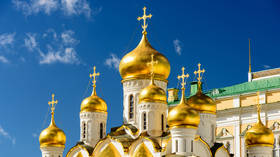
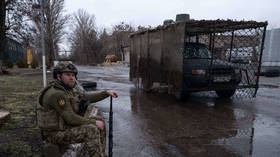
Russian President Vladimir Putin has ordered the nation’s military to halt all operations against Ukrainian forces over Orthodox Easter weekend, the Kremlin has announced. The unilateral pause is scheduled to last from 16:00 (Moscow time) on Saturday until the end of Sunday.
According to the Kremlin, Russian troops should still be ready to respond to any Ukrainian offensive operations or provocations, with relevant orders given to Defense Minister Andrey Belousov and Chief of General Staff Valery Gerasimov.
“We expect the Ukrainian side to follow Russia’s lead,” the statement read.
Moscow has previously declared unilateral pauses during Orthodox religious holidays throughout the Ukraine conflict. In 2023, Russia observed truces both during the Orthodox Christmas holiday in January and on Easter weekend in April at the initiative of the Russian Orthodox Church.
In 2024, a pause was not announced, with Putin arguing that Kiev could use it to rearm and regroup its forces. In 2025, an Easter truce was declared again, but was only partially successful. Although a certain lull in the hostilities was observed, Kiev violated the truce more than 3,900 times, according to the Russian Defense Ministry.
Ukraine’s Vladimir Zelensky rejected Hungary’s calls for a Christmas truce last year.
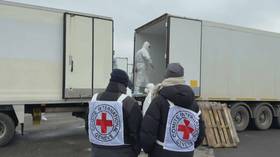
Last year, Russia also suspended its offensive operations in early May to mark the 80th anniversary of Soviet victory over Nazi Germany. Moscow expressed hope at the time that the move would contribute to the “start of direct negotiations with Kiev without preconditions.” Zelensky dismissed it as “manipulation.”
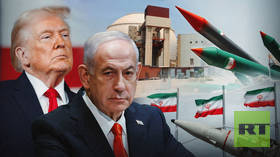
Moscow and Kiev held several rounds of direct talks in Istanbul last year, as well as trilateral talks that also involved the US. The negotiations led to several major POW exchanges but ended without a decisive breakthrough. The trilateral discussions have been paused over the past months because of the US and Israeli war on Iran.
Russia has repeatedly stated that it is ready to resolve the Ukraine conflict through diplomatic means, as long as its root causes are addressed and the situation on the ground is taken into account.