Trump mulls new ‘limited strikes’ on Iran as looming naval blockade sends oil above $100: LIVE UPDATES
US President Donald Trump has not ruled out resuming “limited” strikes against Iran after ordering a naval blockade and threatening to deny “safe passage” to any ships that have complied with Tehran’s fees and rules for transiting the Strait of Hormuz.
The US president could also resume a “full-fledged bombing campaign,” though officials told the Wall Street Journal that this is “less likely.”
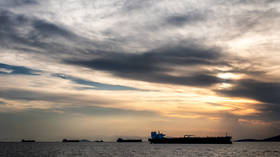
Global oil prices surged above $100 after the US Department of War announced that US forces will begin enforcing a blockade on all maritime traffic entering and exiting Iranian ports from 10:00 AM ET (2:00 PM GMT) on April 13. The move falls short of Trump’s original threat to block “any and all” ships trying to enter or leave the strait.
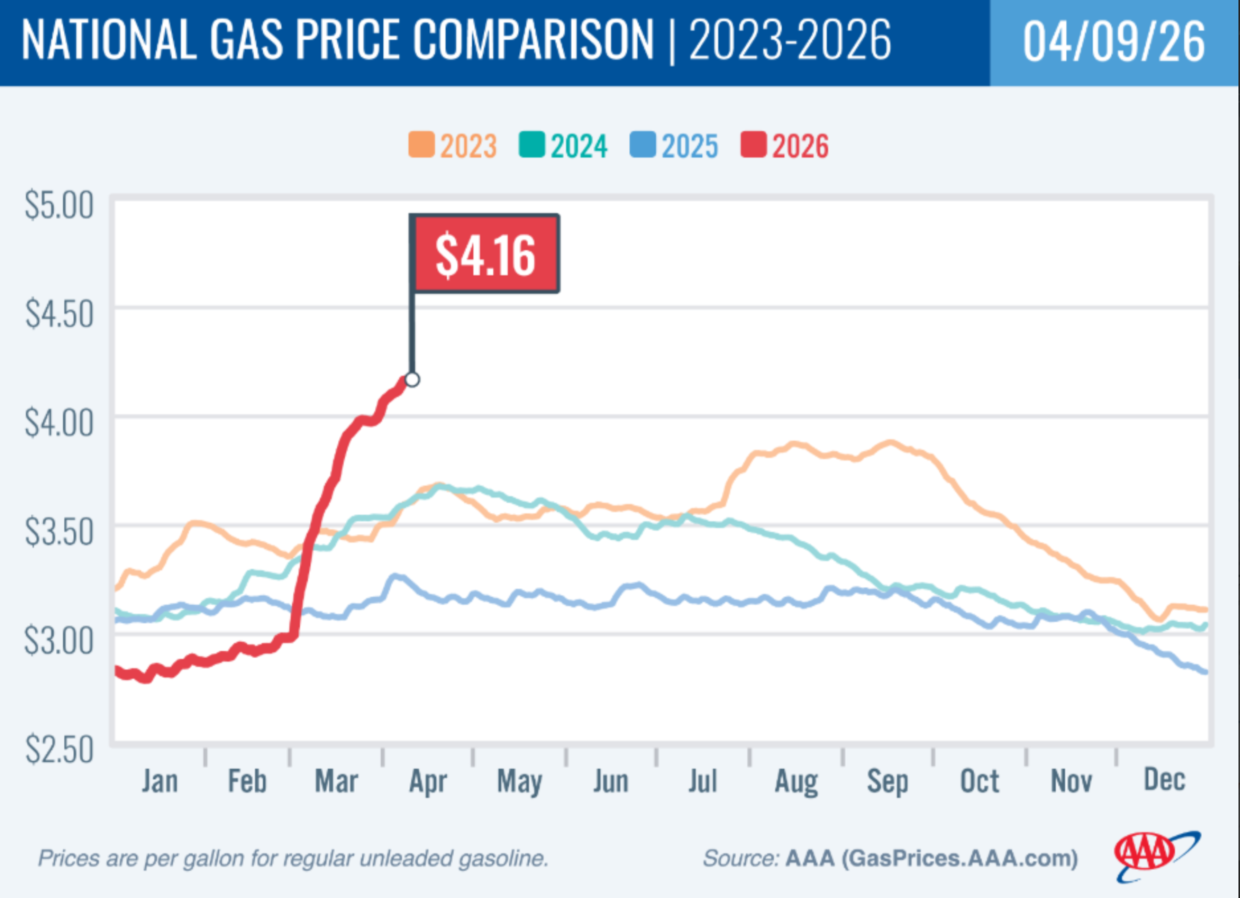
Americans should “enjoy” the current prices at the pump, Iranian Parliament Speaker Mohammad Bagher Ghalibaf warned, adding that “soon you’ll be nostalgic for $4-$5 gas.”
Iran has warned that any hostile military activity in the waterway will be met with force. President Masoud Pezeshkian has said a deal is still possible if the US abandons its “totalitarianism.”
Key developments:
- US Central Command said the blockade would apply to vessels of all nations calling at Iranian ports on the Arabian Gulf and Gulf of Oman, but insisted that it would not impede freedom of navigation through the Strait of Hormuz for ships traveling to and from non-Iranian ports.
- After the collapse of the marathon 21-hour negotiations in Islamabad, Vice President J.D. Vance said Washington left Pakistan with its “final and best offer” still on the table. Tehran said the process broke down because of “excessive” or “unreasonable” US demands.
- Washington has framed the impasse around its demand for a binding commitment that Iran not pursue a nuclear weapon. Iranian officials say the US tried to win at the negotiating table what it failed to secure during the war.
- Iranian Foreign Minister Abbas Araghchi said the talks came within “inches” of reaching a memorandum of understanding before the process was derailed by “maximalism, shifting goalposts, and blockade.”
Follow our live coverage below for continuous updates. You can also read our previous updates here.
13 April 2026
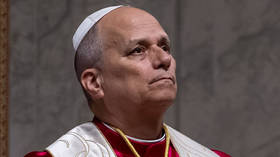
10:11 GMTArchbishop Paul S. Coakley, president of the US Conference of Catholic Bishops, said he was “disheartened” by Trump’s verbal attack on Pope Leo XIV.
“Pope Leo is not his rival; nor is the Pope a politician,” Coakley said. “He is the Vicar of Christ who speaks from the truth of the Gospel and for the care of souls.”
Trump earlier lashed out at Pope Leo, calling him “weak” and saying he should be “grateful” for his appointment after the pontiff criticized his policies.
- 10:08 GMT
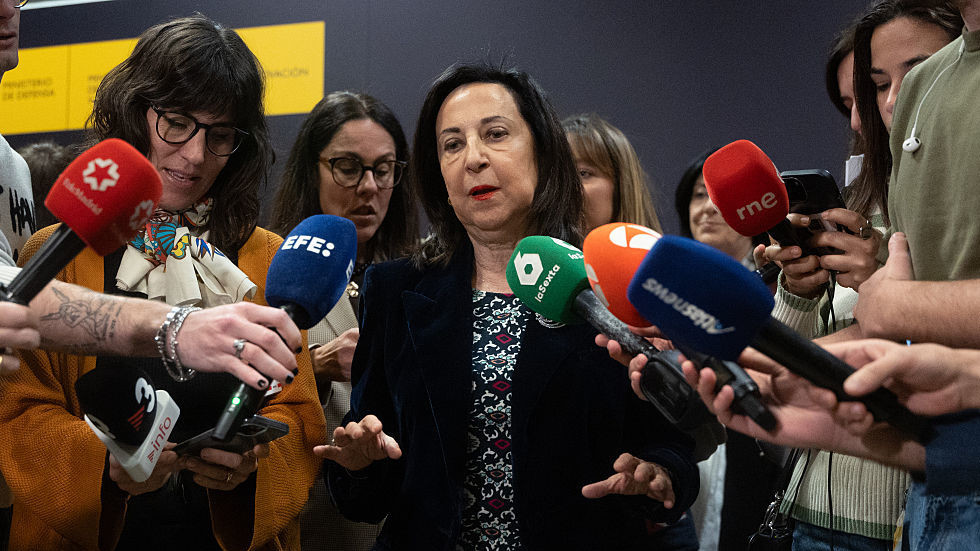
Trump’s plan to blockade the Strait of Hormuz “makes no sense,” according to Spain’s defense minister, Margarita Robles.
“Since this war started, nothing makes sense,” Robles told Spain’s public television. “This is another episode in the downward spiral the world has been dragged into.” She said Spain opposes the conflict and fears its economic fallout.
“Trump and Netanyahu want to impose their rules on the international community, and that must not be accepted under any circumstances,” Robles stated.

- 09:42 GMT
Iran is considering charging tolls on all vessels transiting the Strait of Hormuz, not just oil shipments, under a plan now under parliamentary review.
MP Ali Shirinzad said the draft legislation would impose fees on “every shipment… every passage,” including commercial and passenger vessels, as part of Iran’s expanded “control, supervision and operational management” of the waterway.
He said the framework has been approved in principle by parliamentary commissions, with fees to be calculated in Iranian rials, adding the strait holds “significant economic advantages.”
The proposal is framed as a means for Tehran to assert sovereignty and provide security and services in the strategic chokepoint.
- 09:23 GMT
Pistachio prices have surged to an eight-year high amid the US-Israeli war on Iran, Bloomberg reports, citing market data.
Prices have climbed to $4.57 per pound ($10.07/kg), with retail costs in key markets like India and the Middle East jumping 20-50% in the past week.
“Pistachios are certainly sensitive to disruptions in the Middle East given the region’s role as a major producer, transit hub, and destination,” said Expana Markets analyst Nick Moss, noting the conflict is “compounding an already constrained situation,” as Iranian pistachio trade was already complicated by sanctions and geopolitical frictions prior to the war.
Iran is the world’s second-largest producer, accounting for about a fifth of global output and a third of exports of pistachios.
🚨 #BREAKING 🇮🇱🇺🇸🇮🇷 The Iranian Pistachio Company’s pistachio warehouses near Rafsanjan Airport in Kerman Province were targeted by American/Israeli fighter jets in late March.Iran, once a top pistachio exporter, faced sanctions from the U.S., which led to California becoming… pic.twitter.com/R4gnMW2VZE
— Prime (@nucleusprime) April 7, 2026 - 09:16 GMT
Iranian inventor Leyla Keshavarzi has used her award moment at the Malaysia Invention and Innovation Competition to honor victims of the Minab school strike, carrying a small pink-and-purple backpack in memory of the girls killed.
Iranian inventor Leyla Keshavarzi, who won gold in the Asian Youth category at the 25th Malaysia Invention and Innovation Competition, highlighted the memory of Minab’s young girls killed in American attacks on their school by carrying a symbolic backpack during the ceremony. pic.twitter.com/LHZFtC5EBG
— Press TV 🔻 (@PressTV) April 13, 2026The February 28 strike on the Shajarah Tayyebeh school came on the first day of the US-Israeli attack on Iran, killing more than 175 students and staff.
Keshavarzi won gold in the Asian Youth category for biotech research on brain cancer therapy.
- 08:55 GMT
The Middle East crisis could drive a surge in global food insecurity and inflation, Russian Security Council Deputy Secretary Aleksandr Maslennikov has warned. According to Maslennikov, a prolonged Hormuz blockade could threaten food supplies “first of all” in Saudi Arabia, Jordan, and Egypt, while also posing risks to Russia, including through potential attempts by “external forces” to undermine its food security.
Maslennikov noted European farmers are already shifting to fertilizers from North Africa, North America, and Russia, warning the conflict could trigger “the largest wave of global food inflation in recent years” if it drags into the summer.
He added the crisis could push 45 million more people into hunger globally, to a record 673 million, with corn producers and European greenhouse farms among the most vulnerable.
- 08:44 GMT
Former Israeli acting President and Knesset speaker Avraham Burg has likened the US-Iran ceasefire to “a divorce” between Donald Trump and Benjamin Netanyahu.
Speaking to Going Underground, Burg said Trump “does not pay attention to the whining of his lover Israel,” adding the war may mark “the last couple of months” of Netanyahu’s rule as Israelis grow “fed up.”
He said neither Israel nor the US appears to have won the war, arguing: “Iran got it very strong, but so far it won.” Watch in full below.
- 08:44 GMT
Nine people have been killed and 13 wounded in an Israeli strike on the southern Lebanese town of Tefahta, the National News Agency reports.
Lebanon’s Health Ministry says at least 2,055 people have been killed and 6,588 injured in the conflict since early March.
- 08:44 GMT
Iran says US-Israeli strikes have caused major environmental damage, including the release of large volumes of greenhouse gases and toxic pollutants.
The country’s Environmental Protection Organization said attacks hit industrial sites, oil facilities, and protected areas across seven provinces, damaging 13 conservation zones to varying degrees.
Iran Releases Environmental Damage Report from US-Israeli Imposed WarIran's Department of Environment has announced the environmental damages from the US-Israeli imposed war, with over 53,000 tons of carbon dioxide released amid attacks on protected areas and oil facilities. pic.twitter.com/OyCQIQL8Rn
— Tasnim News Agency (@Tasnimnews_EN) April 13, 2026Fires at three major oil storage complexes in Tehran burned more than 360,000 cubic meters of fuel, releasing nearly 1 million tons of CO2 and around 4,000 tons of hazardous compounds, it said. Separate strikes on fuel tanks in Alborz emitted a further 53,000 tons of CO2 and about 220 tons of toxic substances.
The agency warned the destruction and pollution posed a serious threat to environmental and public health, with impacts severe enough to “threaten the very possibility of life” in affected areas.
- 08:44 GMT
China has warned that a blockade of the Strait of Hormuz threatens global trade, stressing that keeping the key waterway “safe, stable, and unimpeded” is in the international community’s shared interests.
Foreign Ministry spokesman Guo Jiakun said the root cause of the crisis lies in the ongoing war, calling on all parties to show “calm and restraint” as the US Navy prepares to enforce an embargo on ships entering Iranian ports.
Guo described negotiations as “an important step toward de-escalation” and urged adherence to the temporary ceasefire, adding that China is “willing to continue playing a positive and constructive role.”