‘People, scale, infectious optimism’: Here’s why India could be the new kid on the AI block

Thousands of world tech leaders, CEOs, and local founders gathered in India’s capital last week to witness the AI narrative shifting South.
From AI-powered soil sensors for farmers to real-time translation tools that dissolve linguistic barriers for 22 Indian languages, the India AI Impact Summit hosted by New Delhi showcased a live gallery of how a nation can use domestically developed AI solutions to solve everyday problems at a population scale of 1.4 billion people.
The summit converted New Delhi into a massive ‘neural center’ where world leaders and tech giants, including the CEOs of OpenAI, NVIDIA, Microsoft, and Google, gathered to fill the gap between innovative technology and human development.
More than just an event, it represents India’s transition from a global back-office to a front-line AI laboratory to develop population-scale solutions for the next billion users.
Inaugurating the event, Prime Minister Narendra Modi delivered a keynote address that served as a manifesto for the $1.4 billion IndiaAI Mission which aims to establish a state-of-the-art AI compute infrastructure featuring over 38,000 Graphics Processing Units, built through public-private partnership.
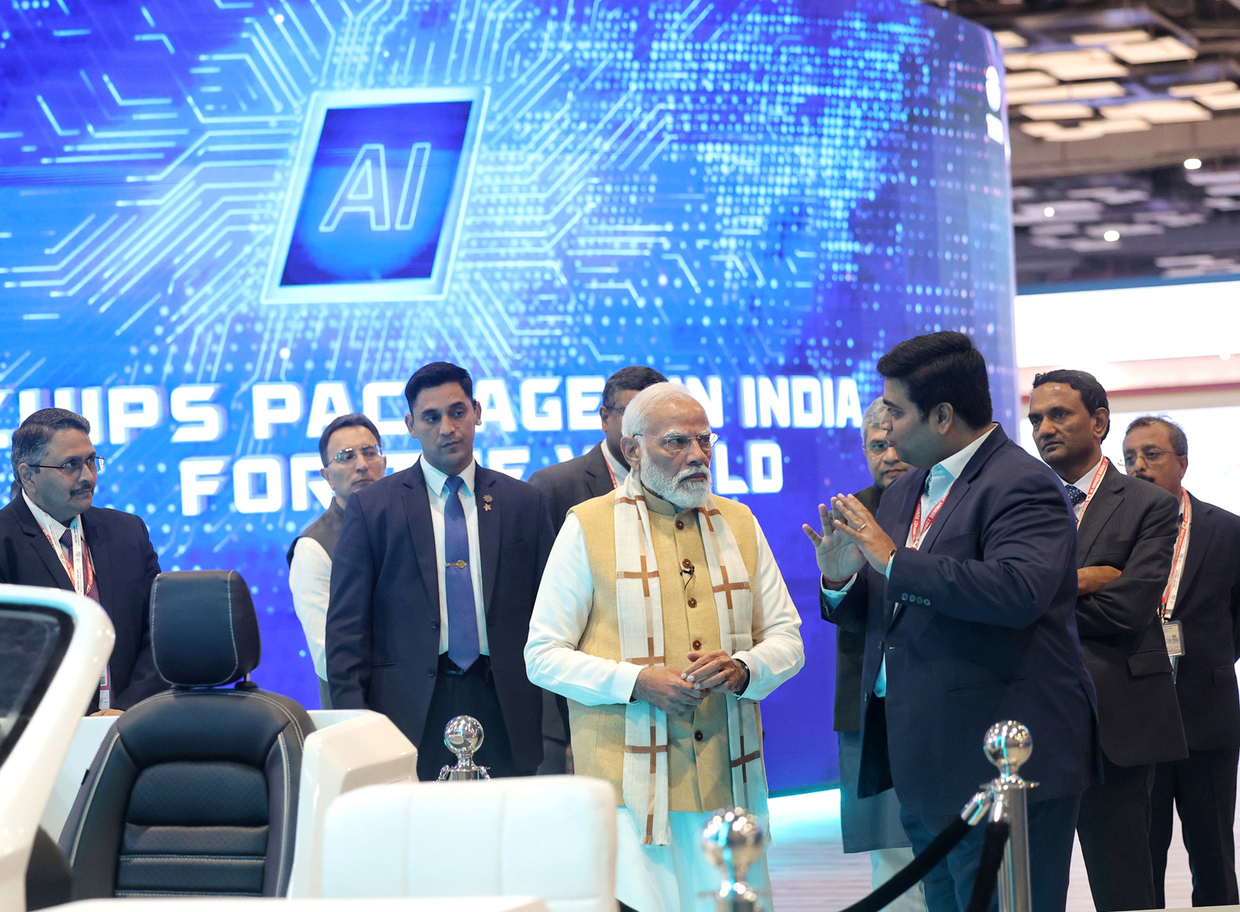
Modi’s message signaled a definitive turn: India is moving beyond its recognized role as the world’s center of business process outsourcing, which gave the global economy IT giants such as Genpact, TCS, Infosys, Wipro, and WNS, to claim a new position as the world’s AI brain.
“For India, AI is not just a tool for efficiency; it is a tool for social justice,” Modi said. He added that India is creating a platform that amplifies underrepresented voices as New Delhi became the first in the Global South to host a global AI summit. “Our vision is simple: AI must accelerate global development while remaining deeply human-centric.”
India is using the India AI Impact Summit 2026 to position itself as a major voice in the global AI conversation, especially as a significant power of the Global South.
The prime minister noted that the country is known for the democratization of computing.
“Through the IndiaAI Compute Portal, the government is now providing GPUs to startups for as low as rupees 67 per hour (less than one dollar). By making the ‘fuel’ of AI cheaper than a cup of artisanal coffee, India is ensuring that the next great model can be built in a small-town cubicle, not just a Silicon Valley boardroom,” he said.
“Our vision is clear: AI must accelerate global development while remaining deeply human-centric,” the prime minister said, describing the summit’s guiding philosophy, ‘Sarvajan Hitay, Sarvajan Sukhaye’ (welfare for all, happiness for all), to stress that AI must benefit society at large.
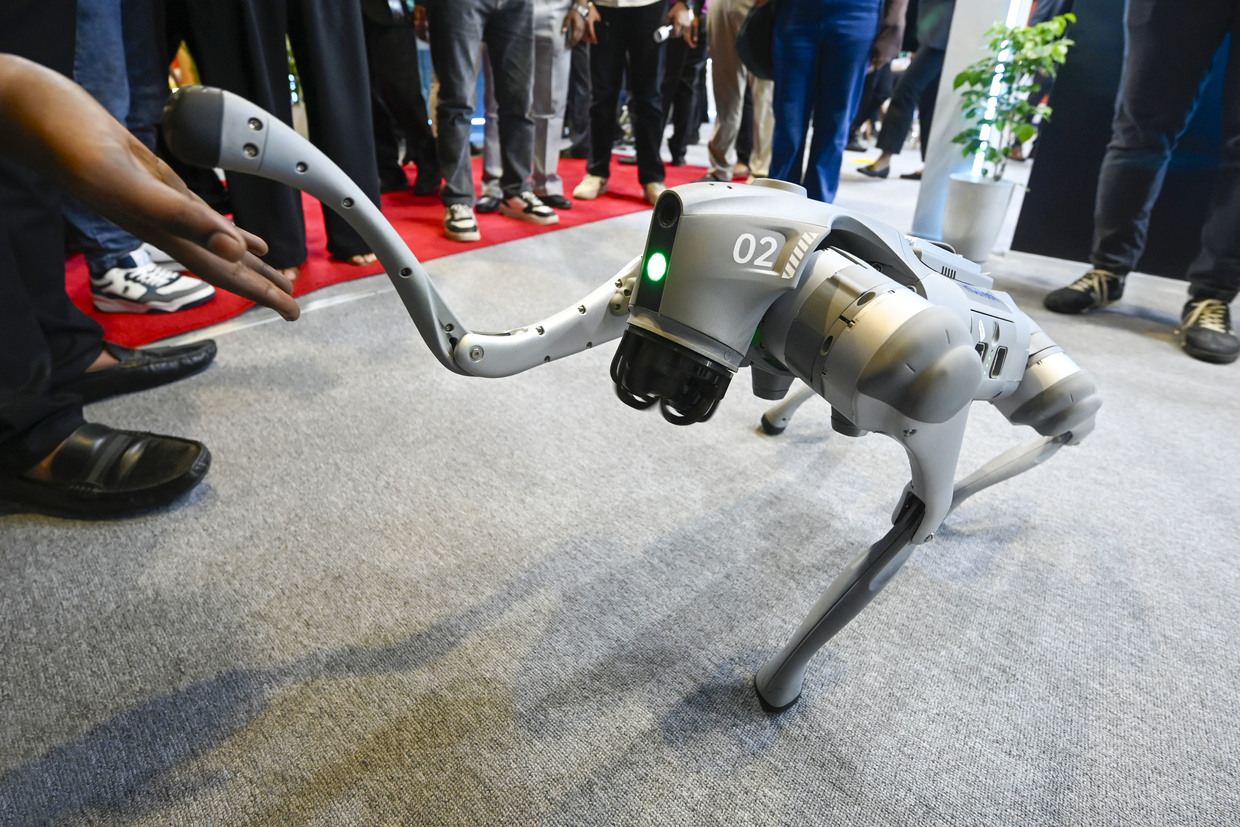
High-powered hub
The event, which ran through the week and closed on Sunday, has become the most prominent AI conversation in Indian history, with an unprecedented 250,000 participants and 35,000 delegates from 100 countries attending.
Outside the heavily guarded entrance, lines of students, researchers, and tech enthusiasts stretch around the venue, waiting for hours to gain entry into a series of pavilions that showcase India’s AI innovations.
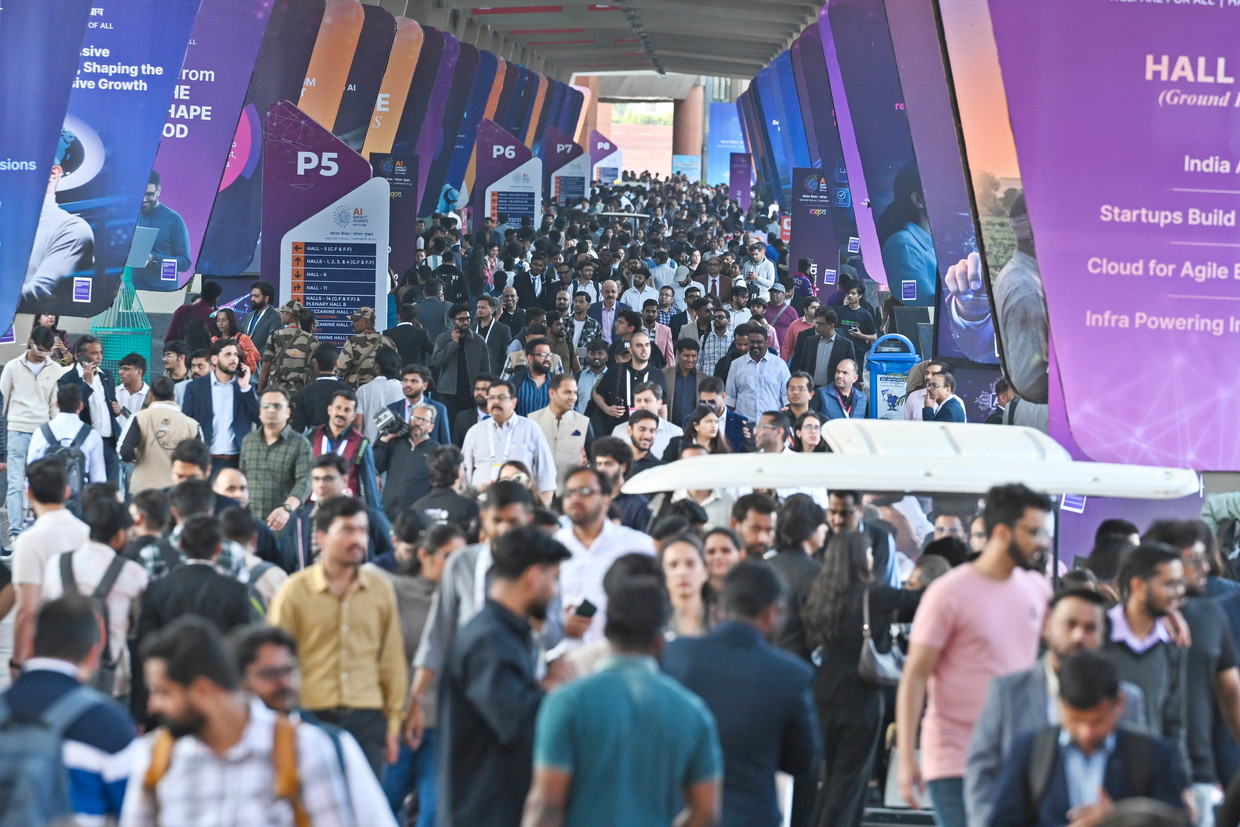
The atmosphere was vibrant with live demos, server systems, and talks in dozens of languages, as delegates from over 100 countries discovered how AI will shape the years to come and how it can be used ethically.
The India AI Impact Summit attracted some of the biggest names from the world of politics, tech, and business.
Google CEO Sundar Pichai spoke of India’s “extraordinary trajectory” with AI and pledged deeper collaboration on infrastructure and language-based tools.
“We cannot allow the digital divide to become an AI divide… AI can improve billions of lives and solve some of the hardest problems,” he said.
“It is the biggest platform shift of our lifetimes... but we won’t realize AI’s full benefits unless we work together,” Pichai said, urging global collaboration and responsible development.
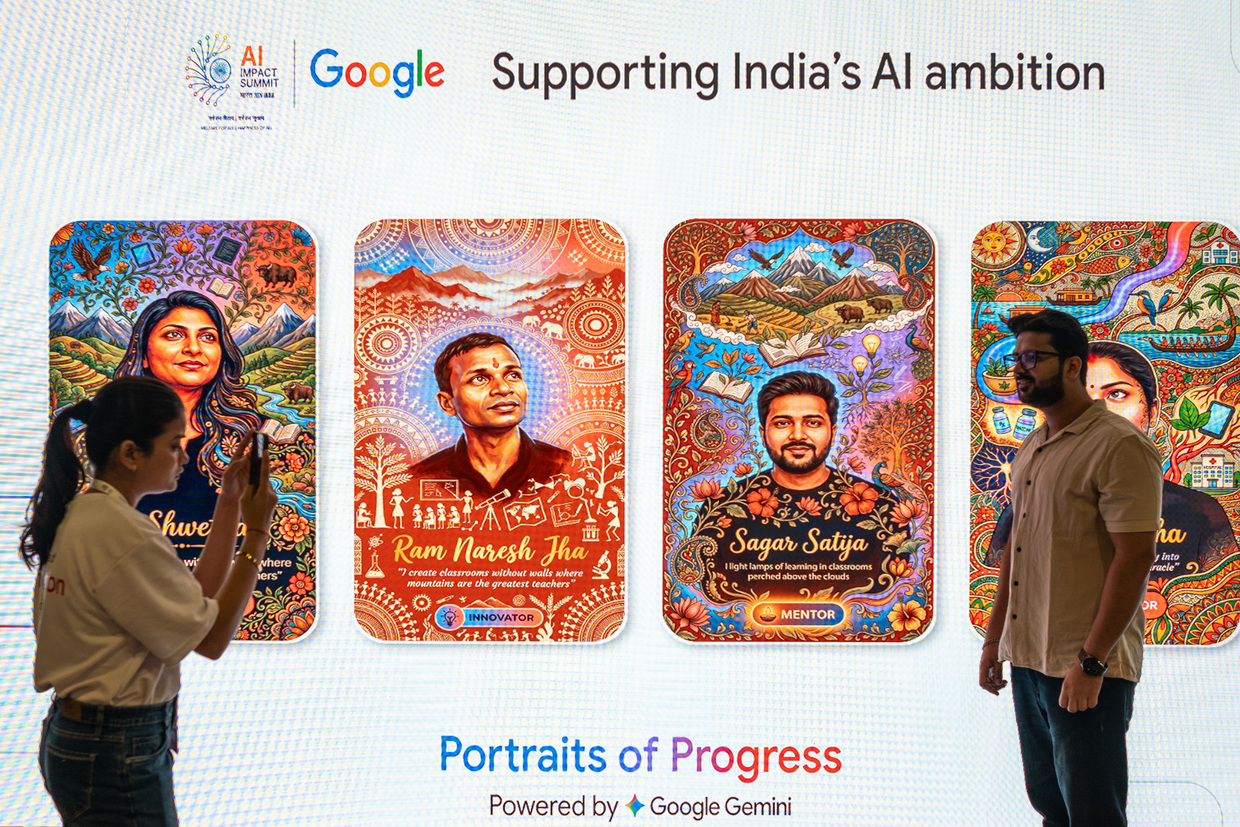
Sam Altman, the CEO of OpenAI, was vocal about India’s unique position in the global hierarchy. With over 100 million weekly active users, India is now OpenAI’s second-largest user base globally.“India has the people, the scale, and the infectious optimism to be a full-stack AI leader,” he said at a roundtable.

Altman added that India is not just a market to sell to, but a partner to build with, particularly in developing frontier models that can handle the complexity of the Global South. “AI will help define India’s future, and India will help define AI’s future – in a way only a democracy can.”
He praised IndiaAI Mission, designed to expand the country’s compute capacity, support startups, and accelerate multilingual applications that improve public service delivery, including healthcare and agriculture. “It is an effort to make sure AI is not confined to a small slice of early adopters but becomes an essential tool for hundreds of millions of people across India.”
Microsoft CEO Satya Nadella noted that the company made a record $17.5 billion investment in India’s AI and cloud infrastructure. “We are committing to skill 20 million Indians in AI by 2030,” Nadella said, commending India’s eShram platform, which he said is a “global benchmark for digital public systems.”
The event did not escape the impact of global politics: Bill Gates, who was supposed to deliver a keynote address at the summit, pulled out hours before his speech, reportedly due to the Epstein Files controversy.
Nevertheless, the presence of head of states, including French President Emmanuel Macron and Brazilian President Luiz Inacio Lula da Silva, contributed to the political significance of the summit.
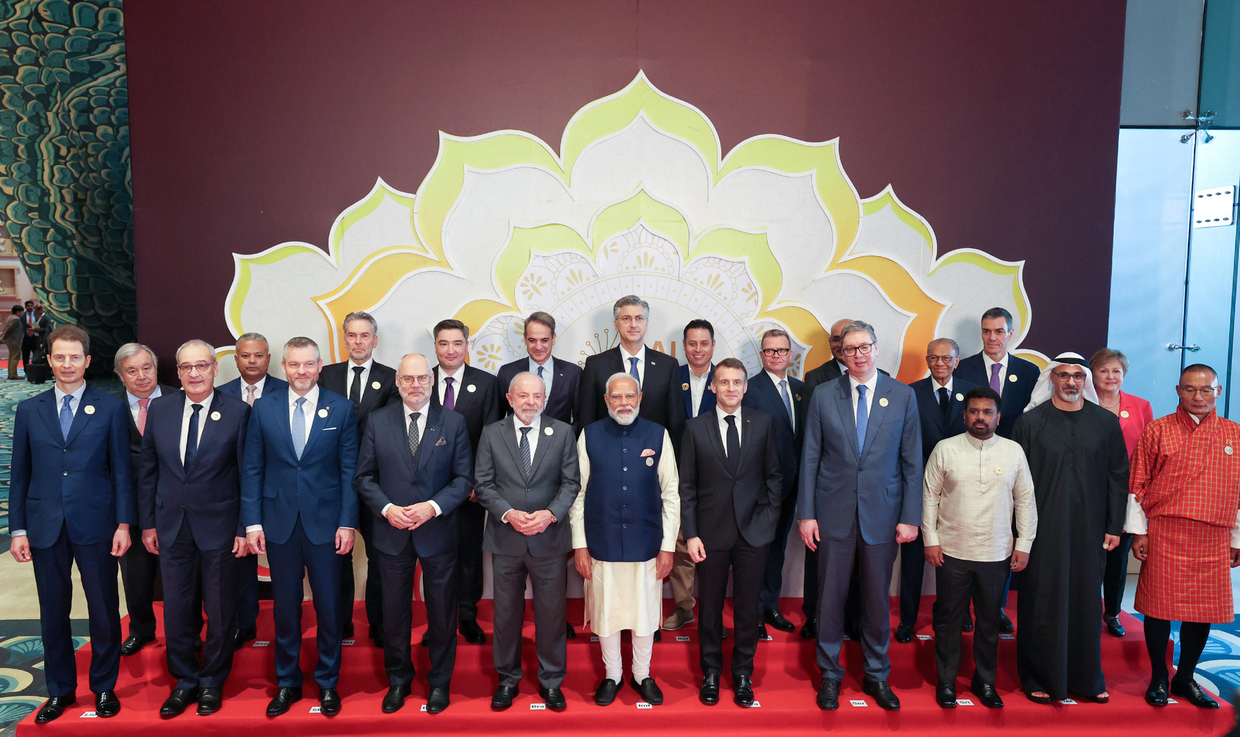
India’s AI answer to world problems
It was not the high-level plenary sessions that dominated the news, but the Expo, where more than 600 startups showcased solutions ready for the market. For many entrepreneurs, the summit was a recognition of their hard work for years.
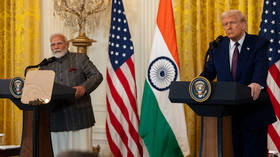
Ankit Modi, a founding member and CPO of healthcare startup Qure.ai, said AI in India has moved past the hype. “AI is not a luxury but a necessity here. When we run healthcare pilots with public health systems, we’re able to detect 35% more TB patients. That is a life-and-death impact at scale.”
Another tech enthusiast, Abilash Soundararajan, the founder and CEO of PrivaSapien, highlighted the speed of adoption. “AI is growing rapidly in India due to consumers’ increasing reliance on it. It will significantly reduce the cost of doing business and increase productivity across every industry.”
India currently generates 20% of the world’s data and possesses the highest AI skill penetration globally.
With 38,000 GPUs already onboarded to support local innovation and 12 indigenous LLMs in development, India is asserting its strategic autonomy.
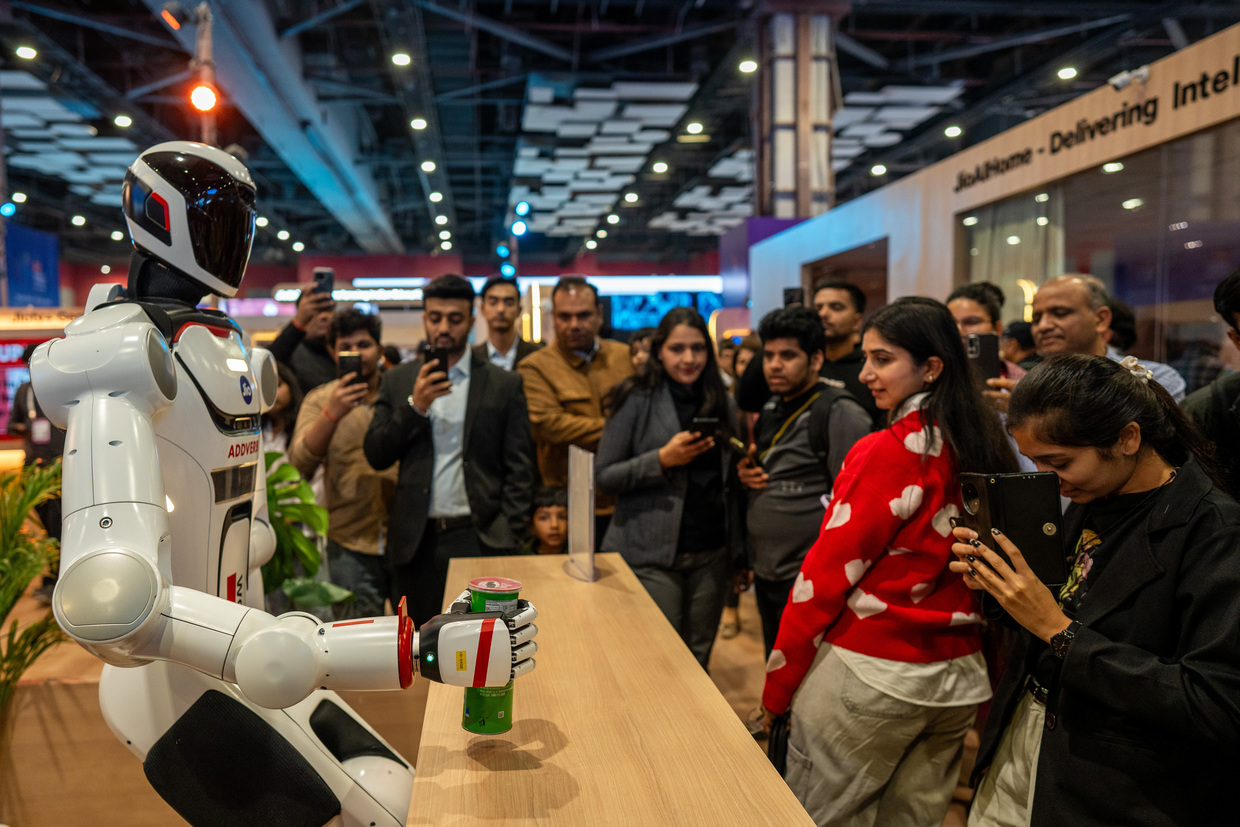
As the second day came to a close in the massive halls of Bharat Mandapam, it was evident that the message for the global community is that the Indian AI experience is no longer just a dream but a reality of the present.
For young innovators like Tasneem Khan, 23, a junior AI engineer who traveled over 1,200 kilometers from Jharkhand to attend the summit, it embodied the spirit of the country’s new generation.
“This summit is a manifesto proving that no nation has scale quite like India,” Khan said. He believes that India, with a population of 1.4 billion people, is no longer just a consumer of global tech solutions. “We have the human resource, we have the brains, and now, we can build the world’s most consequential technology right here at home.”