African Union returning to war-torn nation’s capital
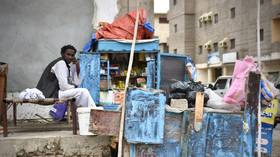
The African Union (AU) is set to resume operations in Sudan’s capital Khartoum, as a delegation arrives to assess conditions on the ground, a local outlet reported on Sunday.
Sudanese Foreign Minister Mohieddin Salem met with the delegation, headed by AU Special Envoy Mohamed Belaiche. The visit aims “to determine the situation in preparation for the reopening of the African Union office in Khartoum as soon as possible,” Belaiche said as quoted by Sudan Tribune.
The return follows recent moves by UN agencies to shift their operations back to the capital after years of working out of the city of Port Sudan, on the Red Sea.
Sudan’s transitional government returned to the Khartoum in January after nearly three years of operating from Port Sudan amid a war between the army and the paramilitary Rapid Support Forces (RSF).
In March of last year, Sudan’s de facto leader and head of the armed forces, General Abdel Fattah al-Burhan, proclaimed Khartoum “free” after government troops recaptured the international airport along with key infrastructure facilities.
Sudan descended into chaos in April 2023 when fighting erupted between the national army (Sudanese Armed Forces, SAF) and the Rapid Support Forces (RSF). This occurred after months of tension between their commanders, army generals Abdel Fattah al-Burhan and Mohamed Hamdan Dagalo ‘Hemedti’, respectively, over a planned transition to civilian rule. What began in the capital, Khartoum, as a power struggle has devastated the country, killing tens of thousands and displacing millions.
Regional and international peace efforts, including African Union mediation and Saudi–US talks in Jeddah, have repeatedly stalled. Sudanese officials have named Colombians and Ukrainians among mercenaries backing the RSF against the army. Officials have also accused Ukraine and the United Arab Emirates of involvement and recently claimed the European Union has an “incomplete understanding of the complex situation” in the country.
Khartoum has also accused authorities in neighboring Kenya of backing the RSF and has broken ties with the East African grouping IGAD amid mistrust of regional mediation. In July, TASIS, a political coalition aligned with the paramilitary, announced the formation of a rival government months after its members signed a charter in Nairobi. It named Gen. Dagalo as chairman of a 15-member presidential council, a move rejected by the UN and AU.
According to Salem, the security and living conditions in Khartoum are improving, and residents now have access to essential services.
The return is not happening in isolation. The International Organization for Migration (IOM) reopened its office in Khartoum in September, while in January the Central Bank of Sudan resumed operations in the city.
At the peak of the conflict, over 15 million people were displaced, according to data from the International Organization for Migration. Since then, an estimated three million have made their way back to their home areas. Of those, more than 1.3 million have returned specifically to Khartoum, according to figures released by the UN migration agency on January 29.
“Overall, 83 per cent of returnees came from internal displacement, while 17 per cent returned from neighboring countries, including Egypt, South Sudan, and Libya, as well as from the Gulf States,” the IOM stated.